


Stop losing power after two pulls.
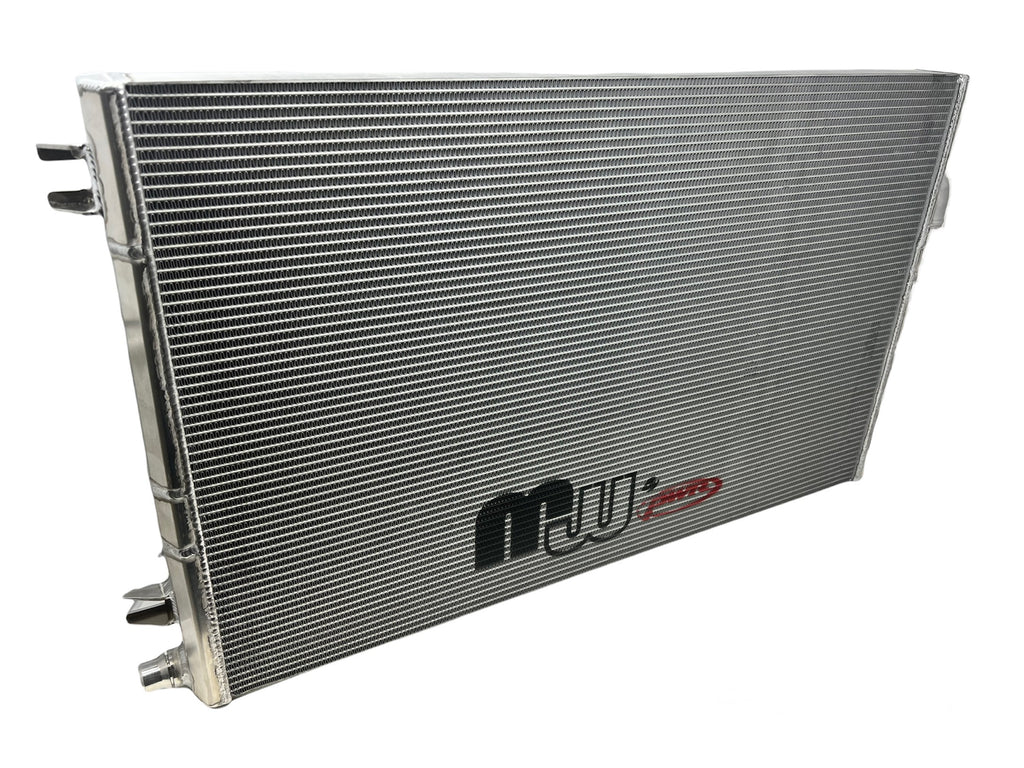
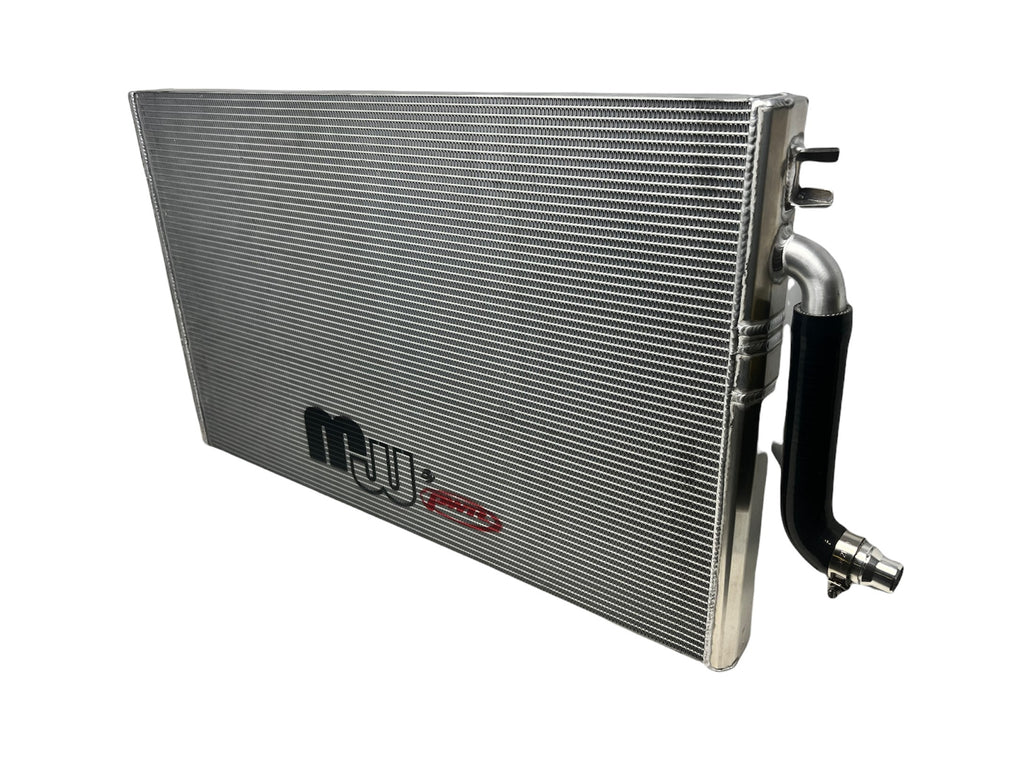
The stock M177 intercooler system heat-soaks fast. In 90°F weather, intake air temps climb roughly 15% every 60–130 mph run — by the fourth pull the car is pulling timing and down on power. This radiator is the fix, designed from the ground up and proven in back-to-back testing in Texas summer heat.
Measured results, not marketing claims:
- 45% lower intake air temps (−25°F) after 5 successive 60–130 mph pulls vs. stock
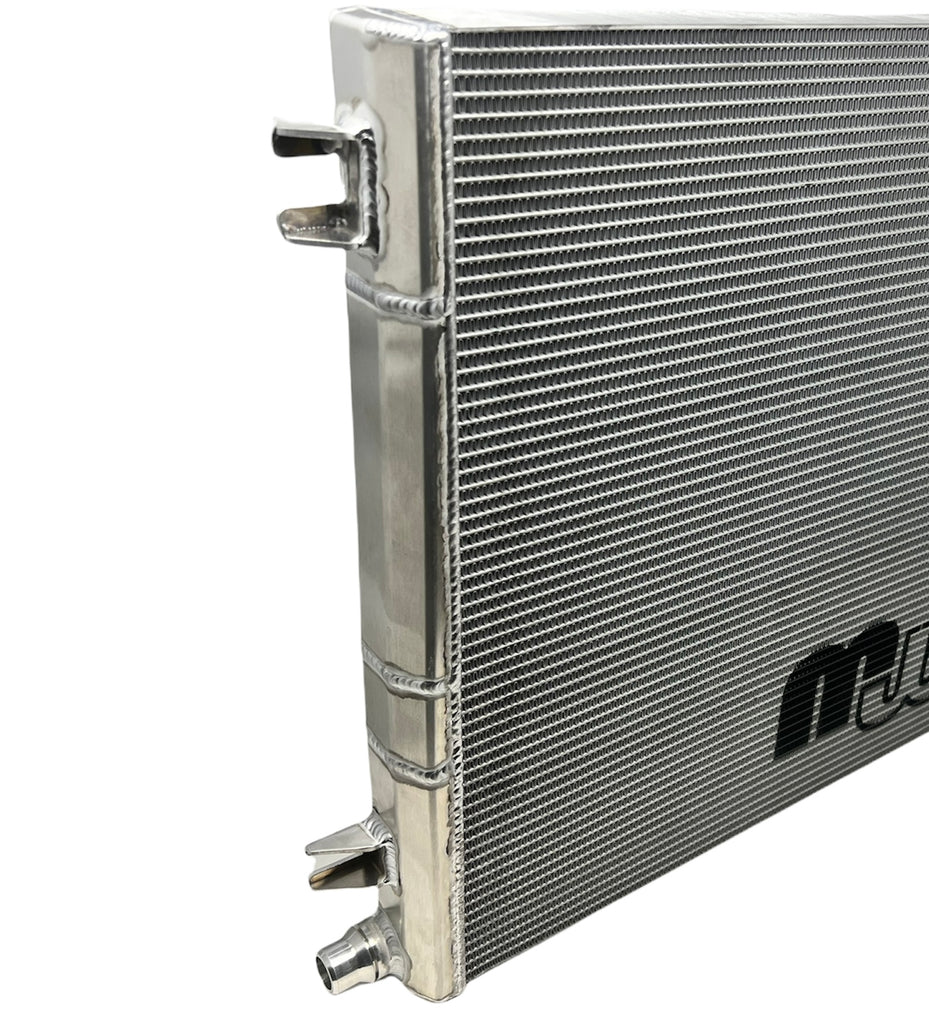
- Proprietary core co-developed with PWR, one of the world's premier radiator core manufacturers — custom fin arrangement, fin density, and coolant tube design
- Converted from single-pass to a triple-pass coolant path with a rerouted entry passage
- Greatly reduced heat soak — keep putting down full power, pull after pull
- Made in the USA
Build your cooling system:
- Stage 1 — this main intercooler radiator: 45% / −25°F IAT reduction
- Stage 1.5 — add an auxiliary radiator: 54% / −30°F peak IAT reduction
- Stage 2 — the complete 3-piece kit: main + both auxiliary radiators, with the second aux acting as an engine radiator (−9 to −12°F engine coolant temps). Best value — saves $190 vs. buying the pieces separately.
Vehicle Fitment:
- 2016-2022 Mercedes-Benz C63 AMG
- 2015-2022 Mercedes-Benz C63 AMG S
- 2017-2022 Mercedes-Benz AMG GT
- 2018-2022 Mercedes-Benz AMG GT C
- 2018-2022 Mercedes-Benz AMG GT R
- 2016-2022 Mercedes-Benz AMG GT S
- 2018-2022 Mercedes-Benz GLC 63 AMG
- 2018-2022 Mercedes-Benz GLC 63 AMG S
Installation Notes:
This product requires vacuum filling per the official Mercedes work instructions and should be carried out by a reputable mechanic with the proper tools. Failure to properly install will lead to inferior results.
Detailed Write-up:
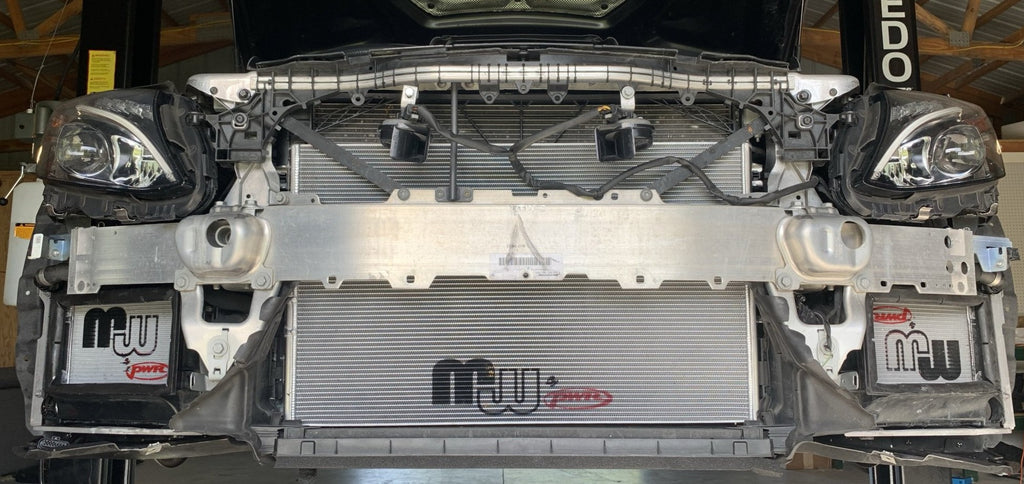
On our C63s, we have 3 front-facing radiators that serve multiple purposes. The primary center and LHS (driver's side in the USA) work together to cool the intake charge temperatures as well as the transmission simultaneously. As your transmission warms up, it directly affects your intake air temperatures — which isn't ideal.
To combat this rise in temperature, we custom designed single and dual radiator options from the ground up. We explored multiple avenues, performed multiple iterations of testing, and came up with a solution that is proven to reduce undesirable temperatures. We partnered with one of the best radiator core companies in the world to optimize heat rejection, which translates to lower intake temps and a happier transmission.
Test Method:
We went through multiple rounds of testing with over 5 different concepts to arrive at the product shown below. We varied core thickness, fin and tube sizing, water routing and end tank design to arrive at our final configuration.
Our final testing was done in the Texas summer heat (90-95°F) at close to 4000DA with our hybrid turbo setup running 27+ PSI of boost. This combination of high ambient temps with high boost greatly stresses the components the intercooler system is trying to cool. Each test was done with successive rolling pulls, with approximately 60 seconds between each run. This causes the entire system to heat soak and progressively get hotter after each pull. All of the data shown below starts at Run 2 — we did this to normalize the results and pre-stress the system equally between each configuration, ruling out variances due to starting temperatures and transmission warm-up.
Stock Baseline:
With the completely stock system, we tracked IATs pull after pull. We measured average and peak intake temperature per 60–130 mph run to obtain a holistic picture of how the stock system performs. The system rises 8-14°F per run, and by the 4th run the car was running poorly with massive timing pulls due to high intake temperatures. We planned to do 5 pulls, but the power loss was so bad we could not manage 5 back-to-back pulls and had to cut the test short.
Stage 1 Results:
This option replaces the primary radiator with our Stage 1 model. It shows significant intake temperature reductions and greatly improved heat soak mitigation. We partnered with PWR to custom design our core, using a proprietary fin arrangement, fin density and coolant tube design. We also rerouted the entry coolant passage and converted the system from single-pass to triple-pass. With these enhancements, we reduced IATs by 45% and 25°F after 5 successive pulls — and kept putting down power without pulling timing like the stock system.
Stage 1.5 Results:
This option uses our main core plus the additional auxiliary cooler on the left-hand side. The main and auxiliary cooler together achieved peak IAT reductions of 54% and 30°F at the 5th run.

Stage 2 Results:
Our auxiliary coolers are reversible and mount to either side of the vehicle. On the right-hand side, the auxiliary cooler acts as an additional engine radiator, consistently reducing engine coolant temps by 9-12°F pull after pull.
